
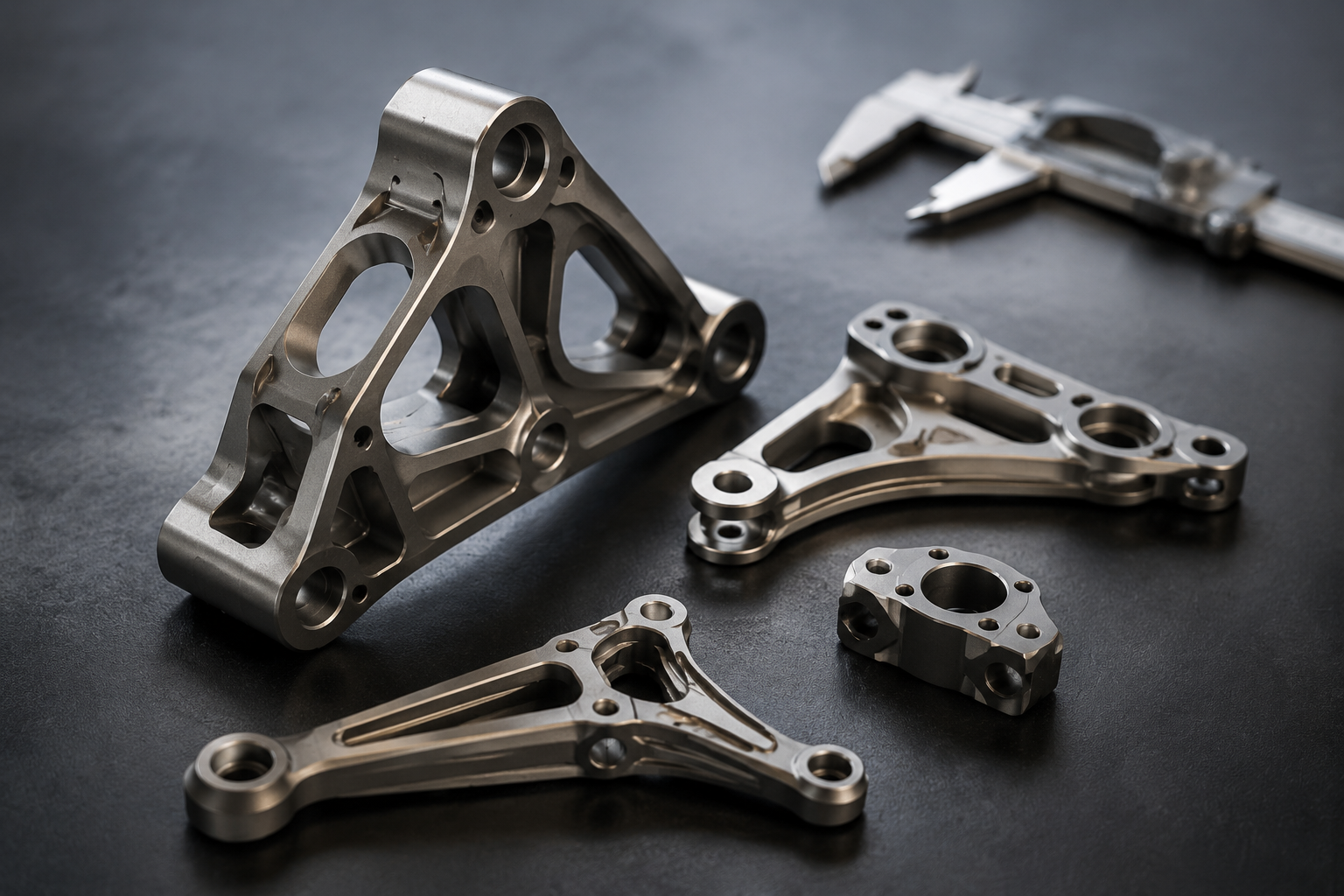
Titanium
Aerospace-grade high strength and lightweight material route.
Best For
High-load structural assemblies, precision tooling fixtures, electronic housings, or parts operating under elevated temperatures.
Buyer should send
3D STEP files plus a 2D PDF drawing calling out thread details, critical tolerances, and exact alloy temper.
Engineering reviews
Mill certificates, coating thickness allowances, tooling radius compatibility, and grain direction when critical.
Material Grade & Property Comparison
Reference values for engineering properties, thickness impacts, and environmental resistance.
| Material Grade | Strength Level | Service Temperature | Corrosion & Wear | Finish Compatibility |
|---|---|---|---|---|
| Titanium Grade 2 | High, tensile 340 MPa | Max 420°C | Outstanding saltwater and acid resistance | Raw bead blast, anodizing |
| Titanium Grade 5 | Extremely high, tensile 1000 MPa | Max 400°C | Outstanding fatigue threshold | Raw bead blast, anodizing |
Best-Fit Manufacturing Processes
The standard route for complex 3D profiles, gear housings, brackets, and flat base plates.
Highly concentric circular shapes, threaded studs, precision shafts, and connector collars.
Excellent for formable metal grades such as Alu 5052 and SS304.
Surface Finish Compatibility
Common post-machining surface treatments compatible with this material class.
As Machined
Parts are deburred. Machining marks remain visible and dimensional precision is preserved.
Bead Blasting
Fine glass beads create a uniform matte satin texture and hide machining marks.
Anodizing
Electrochemical oxide coating for corrosion protection, color options, or hardcoat wear resistance.
Chemical Conversion / Plating
Chem-film and electroless nickel add corrosion or wear protection with controlled buildup.
Procurement & Purchasing Notes
Key technical points to address on drawings to ensure immediate manufacturing alignment.
| Area of Review | Engineering Guidelines | Why it Matters / Notes |
|---|---|---|
| Material Traceability | Raw material certification (MTR) checked against alloy composition profiles. | Confirms the raw stock grade before machining starts. Available upon request. |
| Drawing Controls | Toleranced dimensions checked on 2D PDF drawings. | Standard machining tolerance applies to unmarked features; critical tolerances must be highlighted. |
| Coating Allowance | Layer thickness buildup for anodizing, plating or powder coating is evaluated. | Specify whether drawing dimensions apply before or after coating to avoid interference. |
Technical Updates
Material FAQ
What metal grades are best for outdoor or marine use?
Stainless steel 316 or anodized aluminum 6061/7075 offer strong corrosion protection.
Can you provide material certificates?
Yes. Material test reports can be provided upon request before production.
How do I call out tight tolerances?
Mark key tolerances on a 2D PDF drawing while keeping non-critical features to standard tolerance.
Send drawings for review
Upload your STEP/STP files. Our engineering team reviews tolerances, threads, and material routes before pricing.