
Surface Finishes
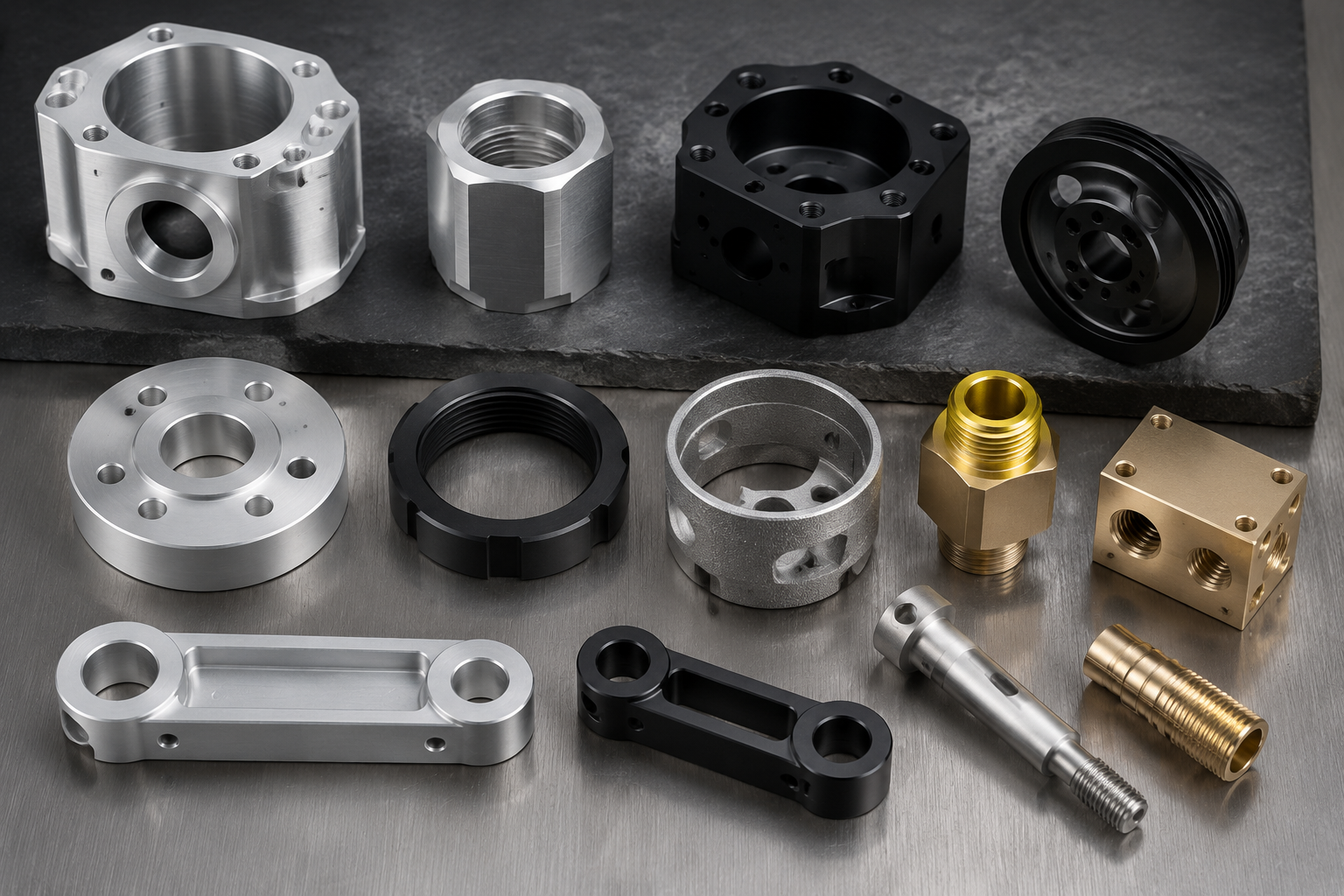
Anodizing, plating, blasting and finishing review.
Best For
Hiding cutter paths, preventing base alloy corrosion, improving surface hardness, or adding color identification.
Buyer should send
2D drawings indicating masking zones, coating type, color standards, and thickness parameters.
Engineering reviews
Thread buildup, jig marks, base roughness compatibility, and surface uniformity across batches.
Surface Treatment Technical Matrix
Reference values for engineering properties, thickness impacts, and environmental resistance.
| Finish Option | Thickness Build-Up | Corrosion Protection | Wear & Hardness | Base Material Fit |
|---|---|---|---|---|
| As Machined | 0 µm | Minimal; base alloy dependent | Base alloy hardness | All metals and rigid plastics |
| Bead Blasting | Negligible matte texture | Moderate; removes oxidation | Base alloy hardness | Aluminum, steels, copper alloys |
| Anodizing Type II | 5-15 µm per surface | High for aluminum oxidation control | Good light scratch barrier | Aluminum alloys only |
| Hardcoat Anodize Type III | 25-50 µm per surface | Outstanding severe-environment protection | Very high wear surface | Aluminum alloys only |
| Electroless Nickel Plating | 10-25 µm uniform build | Outstanding chemical wash resistance | High sliding-wear improvement | Steels, copper, brass, aluminum |
| Powder Coating | 50-150 µm heavy layer | High physical barrier | Good impact-resistant paint shell | Steels, aluminum, sheet metal parts |
Compatible Base Parts
Removes cutter paths and adds corrosion or wear protection to aluminum or steel components.
Adds color and prevents raw-edge oxidation on bent sheet assemblies.
Threads, bores, and sliding tolerance points must be masked to avoid dimensional buildup.
Procurement & Purchasing Notes
Key technical points to address on drawings to ensure immediate manufacturing alignment.
| Area of Review | Engineering Guidelines | Why it Matters / Notes |
|---|---|---|
| Material Traceability | Raw material certification (MTR) checked against alloy composition profiles. | Confirms the raw stock grade before machining starts. Available upon request. |
| Drawing Controls | Toleranced dimensions checked on 2D PDF drawings. | Standard machining tolerance applies to unmarked features; critical tolerances must be highlighted. |
| Coating Allowance | Layer thickness buildup for anodizing, plating or powder coating is evaluated. | Specify whether drawing dimensions apply before or after coating to avoid interference. |
Technical Updates
Material FAQ
Will anodizing affect critical dimensions?
Yes. Type II and Type III anodizing add thickness, so note whether tolerances apply before or after coating.
Can specific faces be masked?
Yes. Ground contacts, threaded holes and sliding surfaces can be masked when marked clearly.
What is the lead time for coating?
Post-processing usually adds several working days for jigging, treatment, verification and inspection.
Send drawings for review
Upload your STEP/STP files. Our engineering team reviews tolerances, threads, and material routes before pricing.